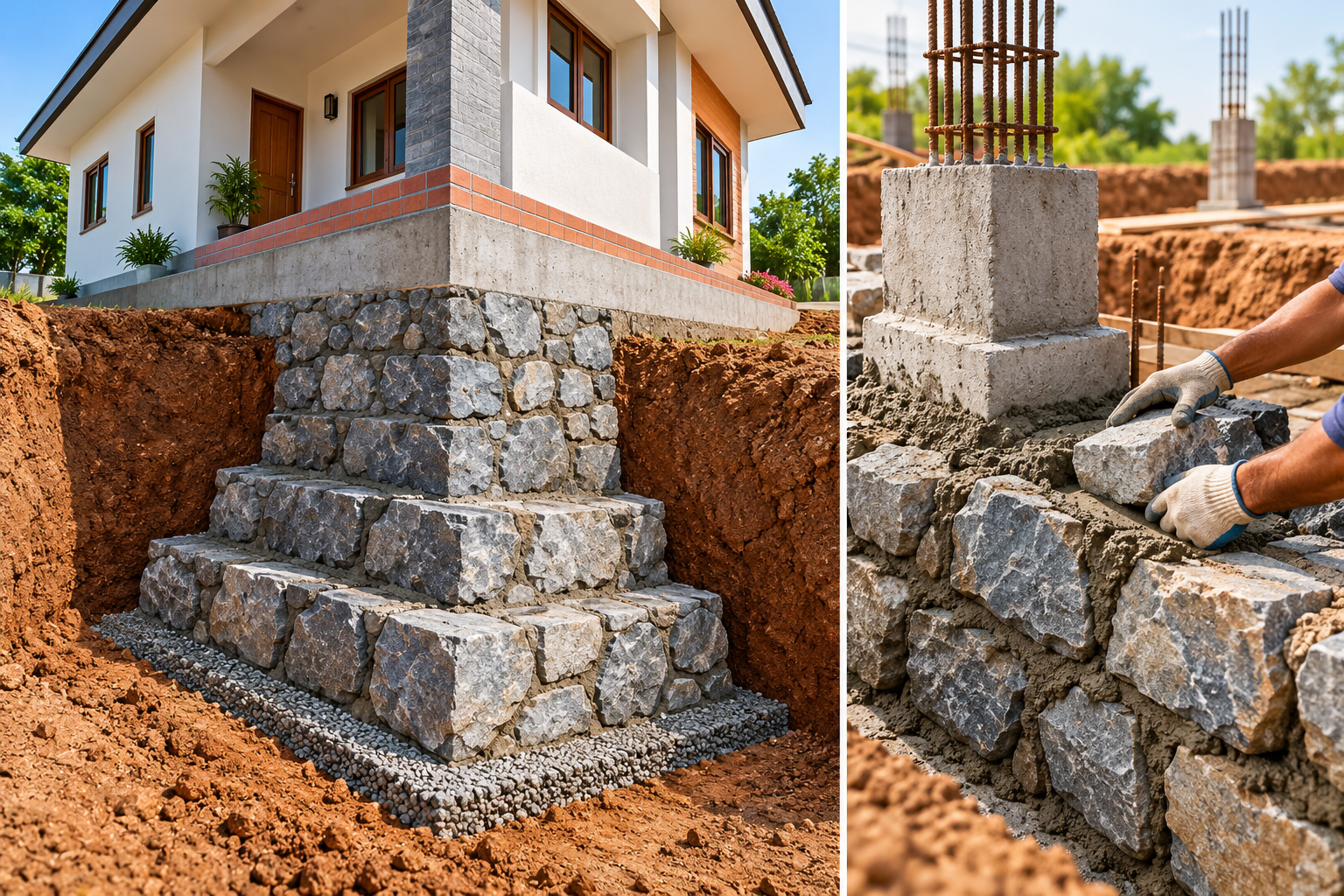
What Is Foundation Size Stone Masonry and Why Is It Important in Home Construction?
A strong and durable home begins with a properly designed and constructed foundation. One of the traditional and effective methods used in residential construction is Foundation Size Stone Masonry (SSM). It provides a stable base for the structure and plays an important role in transferring the building load safely into the ground. For homeowners planning residential construction in Bangalore and Mysuru, understanding the importance of foundation size stone masonry can help in making informed decisions about the quality and durability of their home.
What Is Foundation Size Stone Masonry?
Foundation Size Stone Masonry, commonly known as SSM foundation work, involves using naturally available stones of suitable size and strength to construct the foundation below the ground level. The stones are carefully arranged and bonded using an appropriate mortar to create a strong and stable foundation. The stones used for size stone masonry foundation should be durable, hard, and capable of resisting the loads transferred from the building. Proper selection of stones, mortar, workmanship, foundation width, depth, and site conditions are important factors that determine the performance of the foundation. At constructAhome, foundation construction is approached with attention to structural requirements, soil conditions, material quality, and workmanship to create a reliable base for the home.
Why Is Foundation Size Stone Masonry Important?
The foundation is responsible for transferring the weight of the building safely to the soil. Foundation size stone masonry can provide a strong and stable foundation when it is designed and executed according to the requirements of the project. A properly constructed stone masonry foundation helps distribute the building load over a larger area of soil. This can reduce excessive pressure on the ground and help maintain the stability of the structure. The foundation also needs to withstand various forces acting on the building throughout its service life. Properly constructed SSM foundation work contributes to the overall durability and stability of the house.
How Does Size Stone Masonry Support a Building?
The main purpose of a foundation is to transfer structural loads from the walls and other building elements to the soil. In foundation size stone masonry, appropriately selected stones are placed in carefully prepared courses. The foundation is generally wider at the lower levels than the wall above it. This arrangement helps distribute the load over a larger area. The stones are positioned to achieve proper bonding, while the mortar fills the joints and helps create a unified masonry structure. The exact foundation size, depth, and construction method should be determined based on structural design, soil characteristics, building loads, and applicable construction requirements.
Key Materials Used in Foundation Size Stone Masonry
The quality of materials directly influences the performance of size stone masonry foundation work. Strong and durable stones are selected based on the requirements of the project. The masonry may use materials such as suitable natural stones, cement, sand, and clean water for mortar preparation. The mortar mix should be appropriate for the masonry and prepared according to the project specifications. Properly graded and durable stones should be arranged so that the masonry achieves good interlocking and stability. Poor-quality stones, excessive voids, weak mortar, or improper workmanship can affect the performance of the foundation.
Foundation Size Stone Masonry and Soil Conditions
Soil conditions are one of the most important considerations before starting foundation construction. Different types of soil have different load-bearing characteristics and drainage properties. Before deciding on foundation size stone masonry, the site should be evaluated to understand the soil condition, groundwater situation, site levels, and expected structural loads. For larger or more complex buildings, professional soil investigation and structural design may be required to determine the appropriate foundation system. The foundation should never be selected only based on common practice or the appearance of another nearby house.
Difference Between Size Stone Masonry and Other Foundation Systems
Different foundation systems are suitable for different construction conditions. Size stone masonry foundation is commonly associated with masonry-based foundation construction, while reinforced concrete foundations are designed using concrete and reinforcement according to structural requirements.
| Foundation Type | Common Application | Main Characteristic | Key Consideration |
|---|---|---|---|
| Size Stone Masonry Foundation | Suitable residential construction conditions | Uses durable natural stones and mortar | Soil condition and masonry workmanship |
| RCC Footing | Residential and multi-storey structures | Reinforced concrete foundation | Structural design and reinforcement |
| Isolated Footing | Buildings with individual columns | Supports individual columns | Column loads and soil bearing capacity |
| Strip Footing | Load-bearing wall structures | Continuous foundation beneath walls | Wall loads and soil condition |
| Raft Foundation | Weak or variable soil conditions | Large reinforced concrete foundation slab | Structural and geotechnical design |
The appropriate foundation system depends on the individual project. A qualified structural professional should determine the foundation type based on site and design requirements.
Importance of Proper Foundation Depth
The depth of a foundation is not the same for every house. It depends on factors such as soil characteristics, building loads, site conditions, groundwater, and structural requirements. A properly planned foundation depth helps the structure achieve the required stability. Excavation should reach the appropriate firm stratum as specified in the design. Constructing a foundation without considering soil conditions can increase the risk of settlement and other structural problems. This is why professional planning is essential before beginning foundation masonry work.
Importance of Proper Stone Placement
Stone placement is an important part of foundation size stone masonry. Stones should be arranged to provide proper bonding and minimize large voids within the masonry. Larger stones are generally positioned appropriately within the foundation, while smaller stones may be used to fill suitable spaces. The masonry should be constructed with proper alignment and adequate mortar coverage. Good workmanship ensures that the foundation behaves as a stable masonry mass rather than a collection of loosely placed stones.
How Workmanship Affects Foundation Quality
Even high-quality materials can produce poor results when the workmanship is inadequate. Foundation masonry work requires experienced workers who understand stone placement, bonding, mortar application, alignment, and curing practices. Proper preparation of the foundation trench, removal of loose soil, appropriate stone selection, correct mortar application, and adequate curing all contribute to the quality of the finished foundation. At constructAhome, attention to construction practices and quality control helps create foundations that support the long-term performance of residential buildings.
Common Problems Caused by Poor Foundation Masonry
Poorly executed size stone masonry foundation work can contribute to problems such as uneven settlement, cracks, water penetration, weak masonry joints, and structural instability. Using unsuitable stones or allowing excessive gaps between stones can reduce the strength of the masonry. Inadequate drainage and poor site preparation can also affect foundation performance. These issues highlight why foundation construction should be carried out according to proper engineering requirements rather than relying solely on traditional construction methods.
Is Foundation Size Stone Masonry Suitable for Every House?
No. Foundation size stone masonry is not automatically suitable for every residential building. The choice depends on soil conditions, building design, structural loads, local construction practices, and engineering requirements. For a conventional low-rise residential project with suitable ground conditions, stone masonry may be considered as part of the foundation system. However, the final decision should be made based on the project's structural and site requirements.
Why Choose Professional Foundation Construction?
The foundation is one of the most difficult parts of a house to repair after construction is completed. Errors at this stage can affect the structure above it and may become expensive to correct later. Professional residential construction services focus on proper planning, material selection, structural requirements, site preparation, and quality workmanship. constructAhome follows a systematic approach to residential construction, helping homeowners build with greater attention to foundation quality, structural safety, materials, and workmanship.
Conclusion
Foundation Size Stone Masonry is an important foundation construction method that can provide a stable base for residential buildings when it is appropriately designed and properly executed. The quality of the stones, mortar, soil preparation, foundation dimensions, stone placement, drainage, and workmanship all contribute to the performance of the foundation. For homeowners considering home construction in Bangalore or Mysuru, understanding the importance of foundation size stone masonry can help them make better construction decisions. A strong home starts from the ground up. With proper engineering, quality materials, and skilled workmanship, a well-constructed foundation can provide the stability required for a durable residential structure.
Frequently Asked Questions
1. What is Foundation Size Stone Masonry?
Foundation Size Stone Masonry (SSM) is a foundation construction method that uses durable natural stones arranged and bonded with mortar to create a stable base for a building.
2. Why is Size Stone Masonry used in foundations?
Size stone masonry can provide a strong and stable foundation for suitable residential construction conditions. It helps distribute building loads to the underlying soil.
3. Is Size Stone Masonry suitable for residential buildings?
Yes, size stone masonry foundation can be suitable for certain residential buildings when soil conditions, structural requirements, foundation dimensions, and construction methods are appropriate.
4. How deep should a Size Stone Masonry foundation be?
There is no single standard depth suitable for every house. Foundation depth depends on soil conditions, building loads, site conditions, and structural design requirements.
5. What type of stones are used for foundation masonry?
Strong, durable, and suitable natural stones are used for foundation stone masonry. The stone quality should be appropriate for the project's structural and construction requirements.
6. Is Size Stone Masonry better than an RCC foundation?
Neither system is universally better. SSM foundation and RCC foundation systems have different applications. The appropriate foundation should be selected based on soil conditions, structural loads, building design, and engineering requirements.
7. Can Size Stone Masonry prevent foundation settlement?
Properly designed and constructed stone masonry foundations can help distribute loads effectively, but settlement also depends on soil properties, drainage, structural design, and site preparation.
8. What happens if foundation masonry is poorly constructed?
Poor workmanship can result in weak masonry, excessive voids, water penetration, uneven settlement, cracking, and other foundation-related problems.
9. Why is soil condition important for foundation construction?
Soil supports the building through the foundation. Understanding soil bearing capacity and ground conditions helps determine the appropriate foundation system, dimensions, and construction requirements.
10. Can constructAhome help with foundation construction?
Yes. constructAhome provides residential construction and turnkey construction services with a focus on proper planning, quality materials, structural requirements, and professional workmanship for home construction projects.