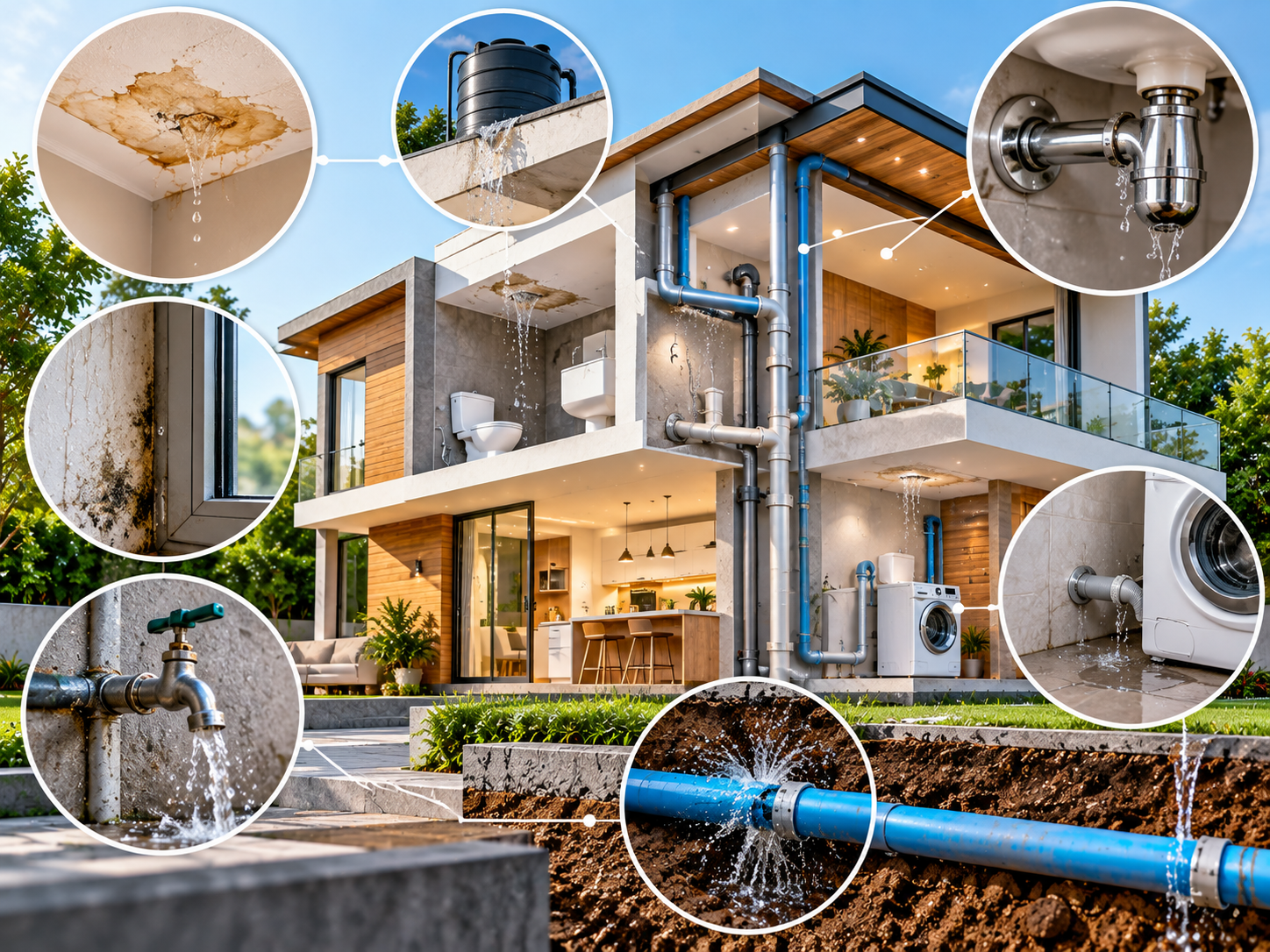
How Can You Identify and Prevent Different Types of Water Leakages?
Water leakage is one of the most common problems faced by homeowners, and even a small leak can lead to significant damage when left untreated. From roof leakage and bathroom leakage to plumbing leaks and seepage through walls, identifying the source early can help protect the structure and reduce repair costs. For homeowners planning a new house, proper waterproofing, plumbing design, material selection, and quality workmanship are essential. constructAhome focuses on delivering well-planned residential construction solutions where these aspects are considered from the design and construction stages.
What Are the Different Types of Water Leakages in a House?
Water leakage can occur in different parts of a home depending on the source, construction quality, plumbing system, waterproofing, and exposure to weather conditions. Understanding the common types of leakage makes it easier to identify warning signs and take preventive measures.
| Type of Water Leakage | Common Signs | Possible Causes | Prevention |
|---|---|---|---|
| Roof Leakage | Ceiling stains, damp patches, dripping water | Cracks, damaged waterproofing, poor drainage | Proper roof waterproofing and drainage |
| Bathroom Leakage | Damp walls, floor seepage, musty smell | Failed waterproofing, pipe leakage | Quality waterproofing and proper slope |
| Plumbing Leakage | Wet patches, reduced water pressure | Damaged pipes or loose joints | Quality pipes and professional installation |
| Wall Seepage | Peeling paint, damp patches, mould | External cracks, plumbing issues, rainwater | Crack treatment and external waterproofing |
| Foundation Leakage | Persistent dampness near lower walls | Groundwater or inadequate protection | Foundation waterproofing and drainage |
| Balcony Leakage | Water accumulation and ceiling stains below | Poor slope or damaged waterproofing | Correct slope and waterproofing |
| Window Leakage | Dampness around window frames | Gaps, damaged sealant, rainwater entry | Proper sealing and installation |
How Can You Identify Water Leakage Early?
Early identification is important because water can travel through walls, floors, and ceilings before the actual source becomes visible. A damp patch may not always indicate that the leak is directly behind it. Look for water stains on ceilings, peeling paint, bubbling wall surfaces, mould growth, damp corners, unusual musty odours, or unexplained water accumulation. A sudden increase in water consumption can also indicate a hidden plumbing leak. During the construction stage, checking plumbing lines, waterproofing layers, drainage slopes, and joints can help identify potential problems before the house is completed.
How Can You Prevent Roof Leakage?
Roof leakage commonly occurs because of cracks, damaged waterproofing layers, blocked drainage outlets, inadequate slopes, or improper treatment around pipes and other roof penetrations. A properly designed roof should allow rainwater to flow toward suitable drainage points. Waterproofing should be applied using appropriate materials and methods, while joints and vulnerable areas should receive particular attention. Regular inspection of the terrace, drainage outlets, parapet walls, and waterproofing surface can also help identify problems before they become major issues.
How Can Bathroom Leakage Be Prevented?
Bathrooms are highly exposed to water, making bathroom waterproofing an important part of residential construction. Leakage can develop when waterproofing is inadequate, floor slopes are incorrect, joints are poorly sealed, or plumbing connections are damaged. Proper waterproofing should be carried out before tiles are installed. The floor should also have an appropriate slope toward the drain so that water does not remain stagnant. At constructAhome, proper planning of plumbing and waterproofing during construction can help reduce the risk of future bathroom leakage and seepage.
What Causes Wall Seepage?
Wall seepage can occur because of plumbing leaks, cracks in external walls, rainwater penetration, inadequate waterproofing, or moisture rising from lower levels. External walls should be inspected for cracks and openings through which rainwater can enter. Plumbing lines concealed inside walls should also be installed carefully and tested before finishing work. Using suitable construction materials, treating cracks correctly, and providing appropriate waterproofing can help reduce the possibility of persistent dampness.
How Can Plumbing Leakage Be Prevented?
Plumbing leakage can develop at pipe joints, connections, bends, fixtures, or damaged sections of a pipe. Poor-quality materials and improper installation can increase the risk of leakage. Choosing suitable plumbing materials and ensuring that pipes are installed by experienced professionals are important preventive measures. Pressure testing and inspection before walls and floors are finished can help identify leaks at an early stage.
Why Is Waterproofing Important in Home Construction?
Waterproofing protects different parts of a building from unwanted moisture penetration. It is particularly important for terraces, bathrooms, balconies, foundations, external walls, and other areas exposed to water. Waterproofing should not be treated as a finishing-stage activity alone. It needs to be considered during the planning and construction process. The correct waterproofing method depends on the location, exposure, construction system, and site conditions.
How Can Balcony Leakage Be Prevented?
Balconies are exposed to rainwater and require proper drainage. If the balcony floor does not have an adequate slope, water can accumulate and eventually penetrate through cracks or damaged waterproofing. Proper balcony waterproofing, drainage planning, joint treatment, and suitable finishing materials can help prevent water from entering the structure. Drain outlets should also be kept clear to ensure that rainwater can flow away efficiently.
What Should You Do When You Notice a Water Leak?
The first step is to identify whether the leakage is related to plumbing, rainwater, waterproofing, or another source. If the leak is associated with a plumbing line, the relevant water supply may need to be isolated until the problem is inspected. Simply covering a damp patch with paint does not solve the underlying problem. The source of the moisture needs to be identified and repaired before finishing work is carried out. For new homes, preventing leakage through proper design, quality construction, waterproofing, drainage, and plumbing installation is generally more effective than dealing with extensive repairs later.
Why Is Quality Workmanship Important for Leakage Prevention?
Good workmanship in construction directly affects the performance of waterproofing, plumbing, drainage, and finishing work. Even good-quality materials can fail when they are installed incorrectly. Proper surface preparation, correct application methods, accurate slopes, carefully sealed joints, and thorough testing all contribute to better construction quality.
constructAhome approaches residential construction with attention to planning, structural requirements, materials, workmanship, and project execution to help homeowners build durable and functional homes.
Frequently Asked Questions
1. What are the most common types of water leakage in houses?
Common types include roof leakage, bathroom leakage, plumbing leakage, wall seepage, balcony leakage, foundation leakage, and window leakage. Each type can have different causes and requires appropriate inspection and treatment.
2. How can I identify a hidden water leak?
Signs of a hidden leak can include unexplained damp patches, mould, peeling paint, unusual water usage, low water pressure, or persistent moisture without an obvious source. Professional inspection may be required to locate concealed leaks.
3. Can waterproofing prevent all types of water leakage?
Waterproofing can significantly reduce moisture penetration in areas where it is appropriately designed and installed. However, plumbing failures, drainage problems, structural cracks, and installation defects may require additional solutions.
4. Why does water leak from the ceiling?
Ceiling leakage can result from roof problems, terrace waterproofing failure, plumbing lines, bathroom floors above, or drainage issues. The visible stain may not always be directly below the actual source.
5. How can bathroom leakage be prevented during construction?
Proper bathroom waterproofing, correct floor slope, quality plumbing installation, properly sealed joints, and testing before tiling can help reduce the risk of leakage.
6. Does poor construction workmanship cause water leakage?
Poor workmanship can contribute to leakage when waterproofing, plumbing connections, drainage slopes, joints, or crack treatments are not completed correctly. Proper supervision and quality checks are therefore important.
7. How often should a house be checked for water leakage?
Homeowners should periodically inspect terraces, bathrooms, balconies, external walls, plumbing fixtures, and drainage outlets. Additional inspection is advisable after heavy rainfall or when signs of dampness appear.
8. Can wall seepage damage a house?
Persistent wall seepage can contribute to dampness, mould growth, paint deterioration, and damage to finishes. If moisture continues for a long period, the underlying cause should be identified and addressed.
9. Is roof waterproofing necessary for every house?
The appropriate roof protection depends on the roof design, construction system, climate, materials, and exposure to rainwater. Proper waterproofing and drainage should be considered during the design and construction stage.
10. How can constructAhome help prevent water leakage?
constructAhome can address leakage prevention through proper home construction planning, plumbing design, waterproofing, drainage planning, material selection, and quality workmanship. Considering these factors from the beginning can help create a more durable home.
Conclusion
Water leakage should not be treated as a minor cosmetic problem. Roof leakage, bathroom leakage, plumbing leakage, wall seepage, and balcony leakage can all affect the comfort, appearance, and long-term condition of a home when the underlying causes are not addressed. The best approach is to consider waterproofing, drainage, plumbing, construction quality, and workmanship during the planning and construction stages rather than waiting for leakage to appear. With proper design, suitable materials, professional execution, and regular inspection, homeowners can reduce the risk of water-related problems and build a more durable home with constructAhome.